What to look for
It begins as a small water-soaked spot on the fruit, then expands into a sunken lesion with concentric rings. The centre often shows dark or pinkish-orange spore masses. Infected fruit dries on the plant and becomes a source of further spread.
How it spreads
Spores move mainly in water splash — from rain and from overhead irrigation. The pathogen also survives between seasons in crop debris and in fallen fruit left in the field. High humidity and long periods of leaf wetness are what it needs most.
Six practical prevention steps
- Remove infected fruit from the field immediately. Dropping it between rows simply stores inoculum for you
- Switch to drip irrigation so leaves and fruit stay dry and splash is reduced
- Irrigate in the morning if overhead watering is unavoidable, so foliage dries before nightfall
- Space plants for airflow — a dense canopy holds humidity all day
- Mulch with straw or plastic to reduce soil splash onto low fruit
- Rotate crops — avoid replanting chilli or related crops in the same ground season after season
Harvest on schedule
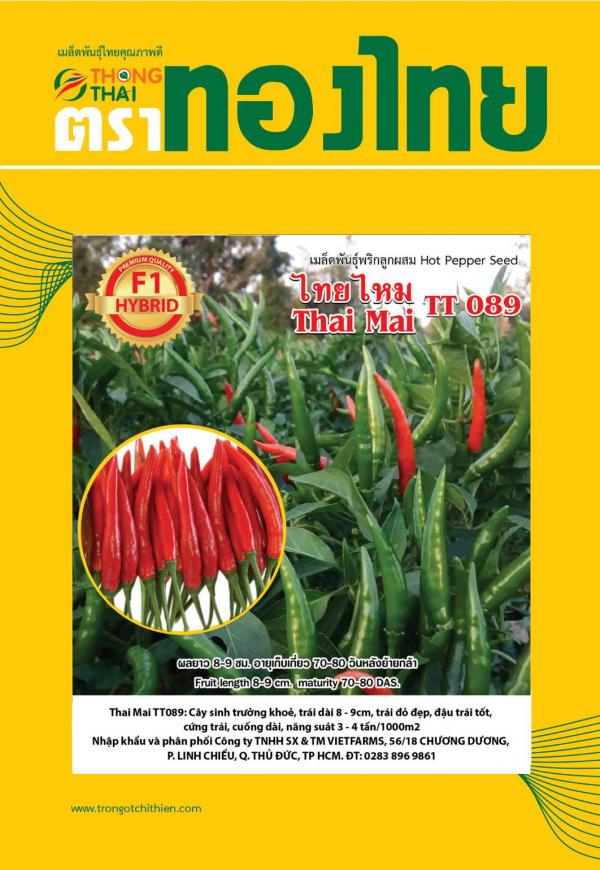
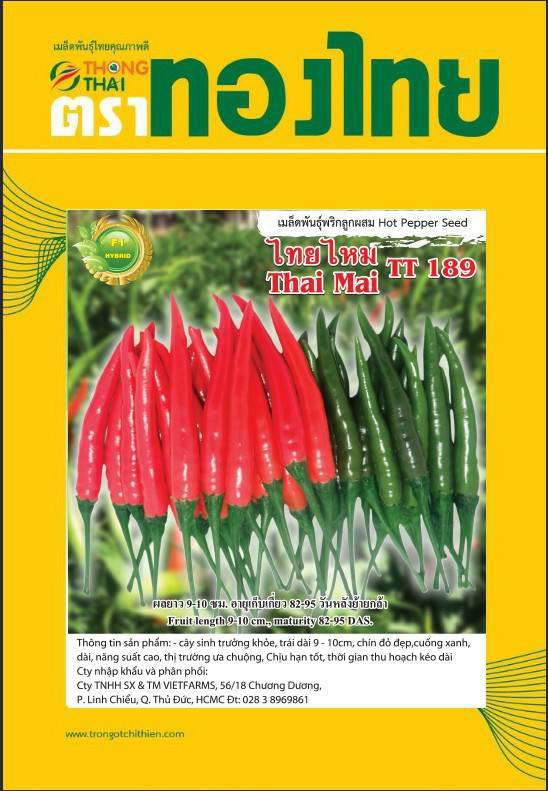
Over-mature fruit left hanging is more likely to become infected than fruit picked on time. Thai Mai TT 089 states 70–80 days after transplanting and TT 189 states 82–95 days; planning harvest to those cycles reduces exposure in itself.
Summary
Once established this disease is very hard to control. Investing in drip irrigation, mulch and the discipline of removing infected fruit usually costs less than chasing an outbreak with sprays.